Showing posts with label book review. Show all posts

Friday, May 17, 2013

Girl who Played with Fire #BookReview

The Girl Who Played with Fire (Millennium, #2)The Girl Who Played with Fire by Stieg Larsson

My rating: 4 of 5 stars


Even better than the original. This second book picks up roughly two years after the Girl with the Dragon Tattoo, bringing back Blomkvist and Salandar as the central figures, along with a cast of familiar and new faces.
I really enjoyed reading Girl with a Dragon Tattoo, despite having seen the movie first-- a practice I abhor.  I love this follow up in Girl who Played with Fire, because as a reader, I didn't see every plot twist--I didn't anticipate how it was all going to end from some previewed movie ending.  I love the way Larsson methodically reveals clues and plots as the investigation unfolds.  I have great admiration for Larsson's ability to tell the story from multiple vantage points, which guides the reader through glimpses, but leaves room for the reader to actively piece together the greater picture. For those who love crime and murder  investigations, this is a great read.  Even for those who don't typically go for that sort of thing, like me, this is still a great page turner.


View all my reviews
StumbleUpon

Monday, May 6, 2013

Book Review: Lady Almina and the Real Downton Abbey

Lady Almina and the Real Downton Abbey: The Lost Legacy of Highclere CastleLady Almina and the Real Downton Abbey: The Lost Legacy of Highclere Castle by Fiona Carnarvon

My rating: 3 of 5 stars


As the title implies, this is the story of the real family who lived in Highclere Castle.  One can't help but make comparisons to Downton Abbey.  There are definitely some similarities, as well as strong differences. The rich family history makes for a fascinating tale. The historic and somewhat factual tone allows the reader to envision the "characters" as real people, if only at the cost of loosing that personal and emotional bond to the "story." 
A remarkable quantity of personal family research is included, including private family letters and photos, which make the overall story very real. In reading, one gets the sense that the author spent hours scouring through boxes of family archives.  Unfortunately, from an historians stance, the text is overflowing with subjective bias. The author clearly has strong connections to the subject and only wishes to cast them in the best light; given that the author is the current Countess, this should not surprise the reader. Overall, a great read for anyone enthralled by turn of the century English country house lifestyle, not so great for those wishing to read a more conventional history on the subject.


View all my reviews
StumbleUpon

Monday, April 15, 2013

Hosting #mommyparties featuring #FastMetabolismDiet by @HaileyPomroy

Sometimes I can't believe my luck.  I was blessed with the opportunity to host a mommy party for my friends and family featuring Hailey Pomroy's new book The Fast Metabolism Diet: Eat More Food and Lose More Weight.

The Fast Metabolism Diet promises to help you lose 20 lbs in 28 days,  all while eating an amazing 5 times a day.  The trick here is to control what you eat during prescribed parts of the week. Each week is divided in to three major portions.  During Phase 1 the goal is to calm your metabolism by eating lots of healthy carbs, natural sugars (from fruits) and some lean protein. During phase 2 you "unlock" stored fat and build muscle by eating lots of protein and vegetables (no carbs, low fat).  During phase 3 you "unleash" the burn by eating some healthy fats, moderate cabs, protein, and low sugar fruits.

Each phase is accompanied by recommended exercise styles that will maximize your efforts during that phase.  Phase 1: Cardio, Phase2: Strength training with weights, Phase 3: Stress Reducing: like yoga or massage.  At the party we shared great ideas for different exercises and routines we could do throughout the week.  I recently found a great zumba set at the library--one disc contains typical zumba dance stuff--a fun way to cardio.  The second disc incorporates free weights with lots of reps--I know, maybe more cardio than the rules require, but I think it might be a good place for someone like me who doesn't typically do serious strength training activities.

Naturally, there are some big diet rules.
You must eat five times a day, every 3 hours... which seems like an aweful lot of food compared to the typically diet.  I think the idea is to keep you filled with good foods so you don't feel hungry enough to stray.  This would really be a problem for my schedule, as I only get the one lunch break at 10:30, and can't eat in front of the kids.  I want to try this diet, but won't have any luck with it until school is out for summer.

Next rules, eat within 30 minutes of getting up, stick with it for at least 28 days, follow the prescribed foods religiously and in order (again, probably easier in the summer since I'll have fewer family functions that would throw the diet off). Also, you must drink half your weight in ounces of water... oy! that's a lot of water... I should get working on this one now. 
As a rule, you should eat organic when possible.  I love that the party came with an opportunity to try Applegate Organic meats!  They were super delicious and everyone loved the meats we tried.  Organic can be so costly at the grocery store, so I had been reluctant to give it a try before.  Now that I know it's so good and good for you, we will have to find a way to make better food choices happen for us.

While I may have to wait to start the diet proper, I think the "don'ts" list offers some tips we can incorporate now.  No corn/no wheat.  The logic being that wheat/corn/soy have been genetically modified to withstand pesticides, poor weather, etc. that they are hard for the body to properly digest and gain nutrition from.  Also, no dairy... they are high in sugar and fat.  (don't read yesterday's article on my new obsession with making homemade ice cream).  No caffeine, no alcohol, no dried fruit or fruit juice and no artificial/ fat free or "diet" foods.

While I confess being scared a little by all of the rules, the what you can eat when, of this diet, I love that there is a complete menu for all 28 days, with all of the yummy recipes to go with it.  Before the party, I made a delicious phase I chili with scores of different beans. It was very filling and warming--it has been an unexpectedly cold gloomy and grey weekend.  I made it in the croq pot and and it filled the house with a great smell.
During the party, guest made and sipped phase III Berry Nut Oatmeal Smoothies...  (this was super good and may replace my typical protein shake in the morning).  We also made Phase III Sweet Potato Hummus which was an interesting twist on hummus.  In addition to sampling the Applegate meats, we also sampled Artisana's Cashew butter, which was as delicious as it sounds.

Guests received coupons and samples of Celestial Seasonings Tea to take home along with their own copy of Pomroy's book.

Big Thanks to Mommy Parties, Random House and all of the party sponsors.  We had such a blast and can't wait to start losing weight with the Fast Metabolism Plan.

Disclaimer:  I received books, recipe cards, a $20 Target gift card and other extra coupons and recipes from brand partners Applegate, Artisana, CrockPot and Celestial Seasonings to help put together my party. 


StumbleUpon

Monday, March 11, 2013

Overdue Book Reviews

Oy! I have been doing a lot of reading lately, even if I haven't managed to post.  I loved my kindle, and now the iPad... both provide me free and instant access to scores of library books.  Even better, I'm now a fan of audiobooks---I listen to them on the iPad in the car or at home while washing the dishes at night... I feel like I can get twice as much done.

So here's a short rundown of a few of my latest reads. 

Moon over Manifest---a book probably better suited for the junior high/tween crowd.  In essence, the main character lives during the Great Depression.  She's sent to live with friends of her father in a small town as he seeks work.  While there, she meets friends, has adventures and attempts to uncover secrets of the town's past. Grade: B
 
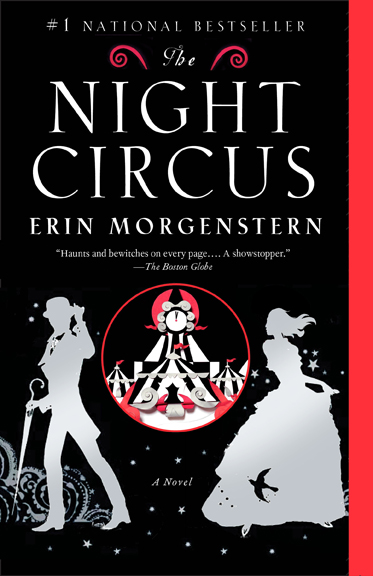
The Night Circus--
Several of my students really loved this one, but for me, it was just alright.  Set near the turn of the century, the reader is invited into the world of an indescribable circus, which acts as the forum for two magical giants each attempting to outdo one another.  However, like the circus, the story reveals itself in slow glimpses, which keep the reader puzzling to understand how it all fits together. And of course, what YA would be complete without an element of romance. While the payoff comes eventually, I really couldn't get behind this one. While otherwise well written, too frequent shifting makes it hard for the reader to connect to the ever changing cast of charecters.  Grade: C+

Feed
This one actually is a class read for one of the classes in our school.  That said, I was initially shocked by this selection--probably due to language.  Futuristic dystopian literature in which each brain is wired to receive constant "computer like" feed.  Walk in to a mall, and your mind is flooded with enfticing advertisements customized to your preferences.  No need to converse at the dinner table, you can think and send a text messages.  I can see why the teacher chose it; there are eerie parellels to the direction we as a society are headed; search engines already cater advertisements based on your search history.  That said, I can see why students might struggle with this one. Dialog occurs in the futuristic vernacular of the author's creation; if you can't master the parlance, you really will be lost.
Grade: B+

Shiver/Linger/Forever
The Mercy Falls Series
This is the series I listened to as an audiobook.  Well, having read Twilight (I know, I know), I can say, at least it's not Twilight. No sparkling vampires and werewolves;  just werewolves this time.  The teen depiction seems a little more realistic, even if no one seems to go to school, or be missed when not there.  No decernable major typos every few pages--then again, I was listening rather than reading, so poor punctuation could have been a possibility.  The language isn't as forced and doesn't feel like it was written by a high school student attempting to use those "SAT words" to make the teacher give her a good grade.  That said, it is still high school sappy romantic drama depicting the mostly absent parents who just don't understand. 

It's okay--and like I said, at least it's not Twillight. Still, it's hard not to draw parellels.  The male interest also has that oh so dreamy poetic/musical soul, if he lacks "Adonis like features".  The female lead is at least slightly logical and not nearly as flighty as Bella. In short, it was a great story to not have to pay complete attention to in order to follow the  plot.
Grade: C

More to come. StumbleUpon

Sunday, February 24, 2013

#Win Sew Red: Sewing and Quilting for Women's Heart Health #Review and Giveaway

Every 90 seconds, a woman in the United States has a heart attack. 
Both men and women suffer heart attacks, but they are often more fatal in women.
More than 10,000 American women younger than 45 have a heart attack every year.

Sobering statistics reported in the Heart Healthy Living section of my latest product review and giveaway.  I am honored to have the opportunity to bring you Sew Red: Sewing and Quilting for Women's Heart Health. Sew Red is part of author Laura Zander's  and her Jimmy Beans Wool heart healthy campaign Stitch Red, which hopes to educate the public  and raise awareness  of the startling reality of these statistics.

As a book, Sew Red is a beautiful compellation of 30 red themed sewing and quilting projects, each brought to you by some of the biggest names in the crafting world, including some of my favorites, Anna Griffin, Nancy Zieman, Kaffe Fassett and Ty Pennington.  Each project features a bio of the designer, and his/her tip for a heart healthy life.
The projects represent a good variety of style, time required, and skill level, showcased in its full photo table of contents. Each project includes material requirements, supplies, cutting instructions, and sewing instructions.  Illustrations are plentiful helpful, making instructions easy to follow. Patterns are enclosed in an envelope at the end of the book and are made of good quality paper (not the flimsy tissue paper patterns), making storage and reuse of the patterns possible.  I also love the spiral binding of the book, making it much easier in the sewing room to fold the book flat to a single page. 
As someone who aspires to sew so much more, I really love the rich variety of fabric patterns represented within the single color theme.  I especially love the sweet sixteen skirt, the Sonoma purse, and the Fleur Rouge Quilt.  I hope to bring you photos of my work--probably not until the summer.

Beyond what you would typically expect to find in an average sewing book, you will find a heart healthy living section, which features information, tips, resources and even recipes.  I'm very excited to give the heart healthy macaroni and cheese recipe a try... I'm sure it has to be tons better for me than my current family favorite.

Sew Red retails for 22.95, a portion of the proceeds benefit the Foundation for the National Institutes of Health in support of The Heart Truth®, a national awareness campaign for women about heart disease, sponsored by the NHLBI. The Publisher has generously offered to share a copy of Sew Red with one of Kat's Adventure Book's lucky readers.  To enter, please use the Rafflecopter entry below.

Please note that I received a free copy of Sew Red in exchange of my fair and honest review.  I received no additional compensation.  All opinions are my own.

http://www.rafflecopter.com/rafl/display/c6803a6/" rel="nofollow">a Rafflecopter giveaway


StumbleUpon

Thursday, December 1, 2011

Book Review: Forge

Forge is the sequel to author Laurie Halse Anderson's acclaimed Chains  and the second inThe Seeds of America trilogy. In Chains, we meet Isabel and Curzon, two slaves struggling for freedom.  While Chains focuses on Isabel's tale, Forge is told through the eyes of Curzon.  Set in Revolutionary America, we follow Curzon as he again finds himself a private in the continental army.  Through battling the British at Saratoga, to fighting to survive the elements during the winter at Valley Forge, Curzon becomes a well-research character of historical fiction. 

Compounding their struggles, the runaways Curzon and Isabel find themselves again under the ownership of Master Bellingham, providing a new meaning to the fight for independence. One must acknowledge that the tale of slavery during the revolutionary era is one that is sorely underrepresented in history and literature as a whole and especially true of works for younger audiences.  Particularly compelling  for young readers are the arguments between Curzon and his contemporaries as they debate the issues of race, and what a war for independence really means for all american patriots. 

In her storytelling, Anderson strives for authenticity.  The characters are careful to describe their living conditions, food, etc.  One has the feeling that Anderson is writing a "living history" in disguise.  Without patience, the reader is liable to become annoyed with the repetitive use of 1776 style slang.  As a former history teacher,  I find the concept good, but the execution contrived.  Too often, the reader looses sight of the real drama behind the story the author is neglecting to tell when she focuses too much on the the history lecture. As a book that will tie in to historical studies of the revolutionary era, Forge outdoes itself.  However, valued strictly for its enjoyability as an independent read, Forge fails to  make its mark.
Overall Grade: B- StumbleUpon

Monday, November 7, 2011

Fall in Love with Food: Book Review-- Real Moms Love to Eat

Fact:  I need to eat better.
Fact: I want to eat better.
Fact: I make way to many excuses for why I don't eat better.

There was a time when I really loved to cook. I think this was especially true during the first year I moved into my own house.  I did all of my shopping--my trick for avoiding bad snack choices was simple--I didn't buy them.  This doesn't mean I didn't eat them, especially when going to my parents' house--but I didn't have them tempting me in my house.  I ate good and I felt great--without working too hard, I dropped 3-4 sizes over about a year or two span.  This was incredible for me, because I'd always been the same size since seventh grade no matter how much I tried to diet.

But I wasn't dieting, and I wasn't working out,  I was just eating better.  I loved food and I loved to cook too. I could spend an hour in Williams-Sonoma dreaming about new gourmet tools, drooling over their glossy colored recipe books and scheming excuses to make something new.  I felt like I was destined for true culinary genius--and did I mention I felt great.  I was fitting in to a new dress size for each major formal dance--which meant a regular rewarding shopping trip.  I was finally able to have a selection of dresses that would fit to choose from--instead of settling for the lesser of two evils because it was all they had in my size.

I regret to report that whatever I was doing right faded away.  It's hard to define the exact moment when things definitively began to take a turn for the worse. I think it all started when I became involved with some poor influences.   I started dating a guy who insisted on eating out regand cooking decadent foods--hello pumpkin ice cream.  My job became super stressful--the return of the anxious eating habits. The school I worked for closed and the idiot dumped me--more self-loathing and pity eating.
I moved in to an uninspiring apartment with a galley kitchen.  To make it worse--it was an hour drive to the nearest Williams-Sonoma (oh the humanity).   I worked late nights and was too tired to cook when I came home. Then I became pregnant and nothing sounded good or tasted good except Popsicle.  Since the baby, I have felt so drained when I get home from work that we settle for the over processed boxed foods.... Oh how this downward spiral compounded with baby fat I never lost has brought me back to that dreaded size I was back in seventh grade and all through high school and college.

I did love to eat--but now food is just something to fill the empty.  I've been so uninspired.  I think that's why I'm pinning some hope on Beth Aldrich's new book Real Moms Love to Eat How to Conduct  Love Affair with Food, Lose Weight and Feel Fabulous.  This isn't some fly-by-night diet fad.  It's really about returning that spark in your food romance by learning to fall in love with the right foods and lifestyle that will treat you like the person you know you want to be.

StumbleUpon

Tuesday, October 25, 2011

Book Review: 50 Things Every Young Lady Should Know

Let me tell you about working in an all girls school with young ladies who are required to wear short skirts....How does one politely inform a teenage girl that if she must wear her skirt two inches shorter than the dress code requirement, then she should bend at the knees and not at the waist?  How do you let young women know that lounging on the sofas in the library is not acceptable, even if there are no men around? Sigh.

Thanks to the an opportunity from book sneeze, I received a copy of  50 Things Every Young Lady Should Know: What to do, What to say, and How to Behave, by Kay West.  West does an excellent job of providing concrete etiquette lessons in real life situations explain what to do and what not to do--and most importantly for the teenage reader--a solid explanation of why. I think explaining the why for etiquette is the hardest part for me.  I know that a student won't listen to what I say, without explaining why good manners are important, but I find it so hard when the voice inside my head is screaming, "Seriously child, how do you not know this stuff?"

StumbleUpon

Wednesday, October 19, 2011

Book Review: The Road


In a world where everything is covered in ash and society is on its last breathe, what defines morality?  In Cormac McCarthy's The Road, we follow the travels of an unnamed man and his son as they endure the trials of nature's elements and the quest to survive by scavenging an America that has been burnt to the ground. Among the few remaining survivors of some apocalyptic calamity, they push their cart of blankets, canned goods and other salvaged treasures down a road leading to the sea.  Along their journey, the two fight the elements, starvation and bands of cannibalistic marauders, with the unnamed man assuring his son that they are "the good guys."  Yet in the man's efforts to survive, one must question what it really means to be "the good guys" ?  

On the one hand, The Road is a hopelessly depressing story of unfathomable loss and waste.  Still, it is so eloquently written that one can't help but love the story.  The characters are so compelling that the reader instantly becomes attached to their predicament.  The whole time, the reader is drawn to hope for the best, while always realistically anticipating the worst.  In short, one of the best reads I've found in a while.  A resoundingly strong recommendation to read this book.  I loved every minute of it--even when I couldn't stop reading because I couldn't "leave them" in a bad place--even when I couldn't sleep because they had me so anxious--even when I cried my eyes out... and cried again any time I thought about it.  Ahh, such a great read.

StumbleUpon

Friday, October 14, 2011

Review: My First Hands On Bible


As we prepared for Peanut’s baptism, I knew there were two gifts that I wanted him to have.  The first was a wooden cross made by my great uncle.  Great Uncle Richard is my father’s godfather.  My grandmother commissioned him to make a cross for me and my siblings for our first communion.  For familial reasons, this gift meant the world to me.
The other gift I wanted for my son was a children’s bible.  I’m sure we probably looked at our children’s bible many times, but for some reason I semi-remember the first time my mother read it to us. After dinner each night we’d wash dishes and then we’d read.  Before we started reading this one, she explained how it was a very special book.  She made a special ritual of washing our hands before we opened the book.  Then she read these kid versions of the bible.  I remember asking tons of questions because there were so many foreign concepts.  Needless to say, this experience left a strong impression on my young mind—and its an experience that I want for peanut.
That said, I was very blessed to have the opportunity to review My First Hands-On Bible from Tyndale House Publishers.  Biblical stories are written in accessible language with plenty of colorful illustrations.  I like that the stories selected provide the biblical chapter and verse, because they are real Bible text from the New Living Translation.  The stories are also kept short for the limited preschool attention span. 

As you read each story, you will notice hand-prints which correspond to mini-activities to guide making the story a “hands-on” experience. For example, in the story of Noah, one activity asks the child to make rain noises.  These small activities are perfect for keeping the attention of a preschooler—and in the case of our little guy, it’s the sort of activity that allows him to let out some of that energy.  These would be perfect for preschool bible study classes. 
Following each passage peanut is consistently greeted by two adorable characters.  Cuddles the lamb suggests three activities so your child can live the meaning.  Pockets the Kangaroo provides a short but special prayer that helps apply the biblical passage to your child’s life. 

In short, I was highly impressed with My First Hands-On Bible.  There is not one thing I would change about it.  It is exactly the perfect bible I had been looking for to share with my son.

If you're interested in your own copy, check out Tyndale House Publisher 
www.Tyndale.com
My First Hands-On Bible retails for $16.99

This is a MamaBuzz Media review. The product was provided by Tyndale House Publishers.  I was provided this book free of charge in exchange for my honest opinion.  I received no additional compensation for the content of this review. All opinions are 100% my own.  

4everybuddy.com
StumbleUpon

Friday, October 7, 2011

Book Review: The Immortal Life of Henrietta Lacks


I first learned of this book while working for Armstrong Atlantic State University's Lane Library.  At the time, it was under consideration as the university's next common read.  The library kept a copy on reserve for faculty members to preview.  Although I wanted to read it, it was never on the shelf.  That's when I knew it must be good. 
The story is much about Henrietta Lacks as it is a story about the author Rebecca Skloot's journey to bring the book to life.  Before this book, Henrietta Lacks was an extremely obscure figure from the past.  Yet, in amazing turn of events, she touched so many lives.  Her cells have been to space, blown up in nuclear testing, and helped discover the polio vaccine.  All this, as her family remained poor and unable to afford health care. 
Henrietta was a mother, wife, cousin and friend.  She was also the source of the HeLa cells--the first immortal line of human cells capable of being  sustained in culture.  Henrietta, an African American woman in 1951 visited her doctor at Johns Hopkins University where doctors removed a tissue sample which would lead to hundreds of scientific discoveries. Henrietta would soon die from the rapidly spreading cervical cancer, but her cells would live on.  
Yet, the existence of these cells was unknown to her family, who were never asked consent for use of the tissues or were made knowledgeable of their value.  Today HeLa sells are a standard catalog item for many lab supply companies.


The Immortal Life of Henrietta Lacks is an excellent example of an interdisciplinary read.  The reader learns of the biology of cell culture, but also the legal and ethical debates that accompany such research.  Skloot artistically interviews the personal element of the Lacks family, past and present creating  a very strong personal element.  Naturally race, historical context and journalistic research methods enter the picture as well.  
When it comes to non-fiction, I am naturally a slow reader.  Yet the story compelled me to read further, ask questions and strive to understand the portions that were out of my comfort zone.  The last few chapters were a huge pay off and made the effort completely worth it. Loved this book and would strongly recommend it to students of any subject. 
The Immortal Life of Henrietta LacksBiographies & Memoirs)
StumbleUpon

Friday, July 1, 2011

Book Review: Flightless Goose

Peanut and I are participating in the reading program through our local library this summer.  While peanut is more interested in flipping the pages than hearing the story per se, I'm always looking for great new stories that can have a positive impact on his charecter.

The Flightless Goose, by Eric Goodman and illustrated by Natalyia Goodman is just such a book.  We were provided a copy of this book in exchange for our review.  We were given the incredible opportunity to participate in the publishers promotional book tour, and today we're hosting a stop.

Gilbert is the main goose of the story.  He begins the story as any other goose, who loves to run and play, swim and fly.  Then one aweful day, tragedy strikes and he is hit by a car.  Though he survives, he can no longer fly. Slowly his friends turn from him and are cruel.  Worst of all, the other geese fly south, leaving Gilbert cold and lonely at the pond.  Yet Gilbert learns to fly and run fast.  When two evil men attempt to poach the geese upon their spring return, Gilbert escapes unnoticed.  Gilbert approaches his human friend Johnny.  They take a stand against these bullies and causes a scene to inform the authorities.  The flock is released and Gilbert, the flightless goose becomes a welcomed hero and asset to his flock.

I love message of overcoming disabilities and accepting differences.  I appreciate that Johnny is also a kid who lives with a disability and also has a role in becoming the hero of the day.  The illustrations are carefully constructed watercolors that beautifully enhance the story. The anti-bullying message is also important for juvenile audiences.  Mostly, I love that Goodman has taken the age old, "don't judge a book by it's cover" lesson we all learned from the ugly duckling and given it a fresh spin, making it a modern, palatable age-apppriate moral story without sounding overly preachy to a young audience.

If you'd love to add The Flightless Goose by Eric D. Goodman and illustrated by Nataliya A. Goodman published by Writers' Lair Books to your summer reading list, you can order it via your favorite local bookstore, or through the books website. The suggested hard cover price is $15.95.


For more fun, have your kids check out this books sponsored interactive website for your young reader.
I received a copy of this book in order to read it and share my thoughts on it. All opinions are my own, and not that of the author or publisher. I received no further compensation. StumbleUpon

Sunday, June 26, 2011

Book Review: Money Secrets of the Amish: Finding True Abundance in Simplicity, Sharing, and Saving


In these hard economic times, lets face it.  Who couldn't use a little extra scratch at the end of the month?  Heaven knows we surely could.   Yet even in the worst of times, the Amish still seem to get by less scathed than the rest of us.  Author Lorilee Cracker went in search of their secrets and offers up some tips and tricks she learned.
You're not going to find any truly mind boggling ideas or get rich quick schemes in the pages of this book.  You're not suddenly going have an extra couple grand floating around to buy the yacht you've dreamed of.  What you will find are honest and simple ideas for making what you already have stretch just a bit further, which might give you just enough of a bubble to breath a little easier.
The book was a quick read and I really enjoyed the book for several reasons.  First, it wasn't flooded with the "well duh" ways to save money--like use the library more, or take smaller vacations.  These methods are probably the first thing any one in a pinch would cut and don't need multiple chapters to discuss.  I respect that. 
Next, when offering advise from the Amish, Cracker ties the tip back into an average "English" lifestyle translation.  When speaking of buying pie ingredients in bulk because of the savings, Cracker then does her own real life experiment with bulk store purchasing.  She also gleans tips and tricks from fellow parents and bloggers to add a variety of real life application to the text.
Finally, my greatest take home message from this book was to change my cultural expectations and the way I veiw what is important.  The repetition of making do, doing with less, or doing without is poinently repeated.  I am now really embrassing the idea of keeping an eye on a big ticket goal.  Everytime I spend money, I first question whether I want what I'm thinking of getting more than that big ticket item.  For my husband, I think that item would be redoing the basement, for me it's a larger family home away from the city.  At any rate, if a purchase isn't necissary and would make reaching the goal a few steps further away, I put the card back in the wallet and walk away.--Okay so not perfectly, but its an ambition.
Overall Grade: B

This book was provided by booksneeze http://booksneeze.com/ in exchange for a fair and honest review.  I recieved no additional compensation.  All opinions are 100% my own. StumbleUpon

Tuesday, July 13, 2010

Book Reviews: Of Local Interest

Praying for Sheetrock by Melissa Fay Green
This nonfiction takes place in McIntosh County which is located roughly an hour south of Savannah. Prior to reading this book, my knowledge of the area consisted of a mostly empty outlet mall and a couple gas station off of I-95. We've stopped there twice maybe.
The story begins in the 1970's with a rather corrupt sheriff in a county where the good ole boys system was accepted as the norm. While the opening scene of a sheriff permitting the pillaging of a truck wreck at first seems justifiable given the poor economic environment, one soon learns of far more unjustifiable practices. Thurnell Alston becomes the "hero" to stand up to Sheriff Popell and his corruption, gradually bringing the long delayed civil rights movement to a coastal Georgia community. However, even heroes sometimes fall and the last fifty pages illustrate that Alston is merely mortal. Green does brings an Agee-like quality to her writing and does an excellent job of capturing her subjects through interviews with parties on all sides.

Grade: B

Ecology of a Cracker Childhood by Janisse Ray
If I were a writer, I would want to write a book like that offered by Janisse Ray. She artistically weaves her experience as a child and her insight as an environmentalist to convey a tale of the environments impact on humanity and humanity's impact on the environment. Set in Appling County, Ray creates a patchwork of local history, genealogy, and personal reminiscence tied to the driving theme of the work; the impact of capital gain on the unique ecology of the long leaf pine forests. Her story is especially moving, because she rarely openly preaches in "Save the Pine Gopher" picket sign fashion. Instead, she gently guides the reader, building a bond of trust and acceptance. She then utilizes this trust to persuade readers to see the same value she sees in an ecosystem that is quickly disappearing. Granted, I did not grow up in Georgia and could not tell the difference between long leaf or slash pine. Still, the story reminds me of the old growth "black swamp" ecosystem of home, a story that is likely familiar to others in many parts of the nation.

Grade: A


Waddie Welcome and the Beloved Community by Tom Kohler and Susan Earl

One the one hand, this book is short and easily read during a lunch break. On the down side, the story lacks the detail that would flush the story, leaving the reader wishing to know more about the central character, Waddie Welcome. Waddie grew up in Savannah and had CP. Through time, family members who had cared for him died or moved on, and Waddie was placed in a nursing home away from the community. Through the efforts of many active citizen volunteers, Waddie was able to live his final years among friends and family in Savannah. By pushing for more personalized care for Waddie, he was able to change the medicare system. It's an amazing story with excellent photo images. Yet, there is so much more the reader is left wondering about Waddie. Still, in just the few short pages of this book, the reader will be in tears by the end.

Grade: C+ StumbleUpon

Tuesday, June 29, 2010

Book Reviews: Lincoln and The Postmistress

Review 1) Abraham Lincoln: Vampire Hunter by Seth Grahame-Smith

You know there are hours of your life spent reading that you will never get back when a glance at the acknowledgment reveals an author's sources to be Wikipedia and Google. As a reader, I was more shocked by the authors blatant revelation of his lack of research than the fact that it was so painfully obvious that academic research was lacking. Essentially, it's the life story of Abraham Lincoln, explaining the death of his mother and those whom he loved and lost in his life as victims of vampires. After his mother's death, young Abe commits to killing every vampire in America. Trained by a "good vampire" Abe learns to track and kill his enemies. Eventually his efforts results in the Civil War, since southerners were in a conspiracy to keep slaves to feed vampires.
Yes, I am a naive history geek who expected more from this title. Sure, I knew it was fiction. No, I didn't expect a completely authentic biography. But seriously, I did expect more. With all of the semi-credible civil-war historical fiction out there, I expected Grahame-Smith to display a more scholarly approach to his work. Instead, the reader is filled with the same high school history stereotypes of North and South that completely ignore the complexity of the situation. He fills the pages with pseudo-history in a made for Hollywood fashion. While explanation of what happened at Roanoke is imaginative, the poorly photoshoped photos do little to add to the story's credibility as conceivably possible. In short, this work joins Meyer's Saga in the long line of vampire writing that is an insult to the term "literature." Thank heavens that at least Lincoln's vampires don't sparkle.
Grade: D-

Review 2: The Postmistress by Sarah Blake

Compared to the first read, this one could only prove better. Luckily this historical fiction shows indications of author invested research, adding credibility to both the story and strengthening the reader's bonds to the characters.
The story focuses on seemingly unrelated people and places shortly before the US enters WWII. A doctor from a small town in Massachusetts travels to a London under Nazi attack. There he meets and American radio correspondent shortly before his own death. The radio correspondent travels Europe, looking for a way to voice the situation of Jewish refugees, the doctor's wife awaits the return of her husband. This story is filled with heartbreaking scenes and the reader becomes involved in small town life.

I smiled, I cried, I ached for each of these incredibly believable characters. Again, not 100% historically accurate, though the author openly acknowledges and explains the logic behind her shortcomings. Although the story is more about the characters than the moment in history they share, they interact in a firmly researched realistic environment.

Grade: B+ StumbleUpon

Monday, August 31, 2009

The Best Picture Book Ever

For a youth services librarianship application, I needed to write an essay identifying the "best picture book I ever read" and describe why. The following is my response.

Recently, I have been volunteering to shelve children’s books with the Savannah’s Live Oak Public Library newest branch. New children’s books have an exciting smell and luster that has yet to be marred with character from loving little hands. As I sort the titles, many are familiar faces from my own childhood or experience, babysitting, or work at Locke Branch. Mike Mulligan and the Steam Shovel, Blueberries for Sal, Alexander and the No Good, Very Bad Day, Where the Wild Things Are, Olivia, Eloise, and an entire case filled with Dr. Seuss. Mrs. Nelson, Amelia Bedilia and all those Froggie books I used to bribe Jonathan into bed time, greet me as old friends. The list of titles suitable for the honor seems endless. Still, my heart will forever remain loyal to one title.


“In the light of the moon a little egg lay on a leaf,” and thus began my childhood obsession with Eric Carle and his The Very Hungry Caterpillar. From my first trip to the local public library (Locke Branch) and every other visit until I graduated to “chapter books,” it remained the coveted prize I would nudge other kids out of the way to grab.Maybe I’ve always been a fan of Carle’s colorful illustrations and the unique “hole”-some page design. Maybe there is some deep, post-modernist interpretation to be gleaned from its glossy pages. I think the most likely reason of all, however, is the thrill of the happy ending revealing that “He was a beautiful butterfly!”


No matter how many times I heard or read The Very Hungry Caterpillar, I couldn’t help but become hooked. With exciting onomatopoeia and repetitive phrasing, it is hard not to anticipate what will happen next. These traits make it the perfect book to share with young readers cultivating their curiosity and passion for reading. Additionally, the story lends itself to enrichment and education. One could easily tie in lessons on diet, days of the week, colors and metamorphosis. Of course, that’s not to mention the myriad of caterpillar and butterfly art projects to take home.


I could cite the scholarly literature and reviews I perused in an effort to justify my selection. Yet, with a book as classic and timeless as The Very Hungry Caterpillar, doing so only detracts from the simple elegance of the story. Many children’s titles come and go. There may even come a time when the great Spongebob Square Pants fades from popularity. However, other titles seem to always have been and always will be; they are the core of any public library’s children’s collection. Any children’s collection worth its state budget allotment will forever contain The Very Hungry Caterpillar, earning its deserved place as the best picture book ever.


StumbleUpon